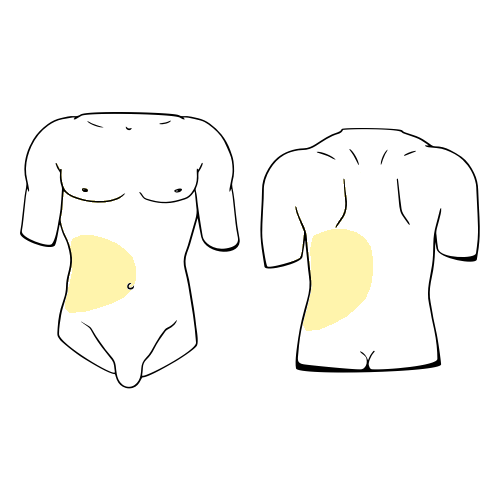
Indications
- Low back pain
- Sciatica
Contraindications
- Infection overlying injection site
- Allergy to local anesthetic
Equipment
- 20–30 mL of local anesthetic of choice
- 20 G, 10 cm nerve block or spinal needle
- Saline flush
- Cleansing solution
- Ultrasound with low-frequency curvilinear transducer
- Ultrasound transducer sterile cover
Preparation
Position
- Position the patient prone, if possible, or sitting
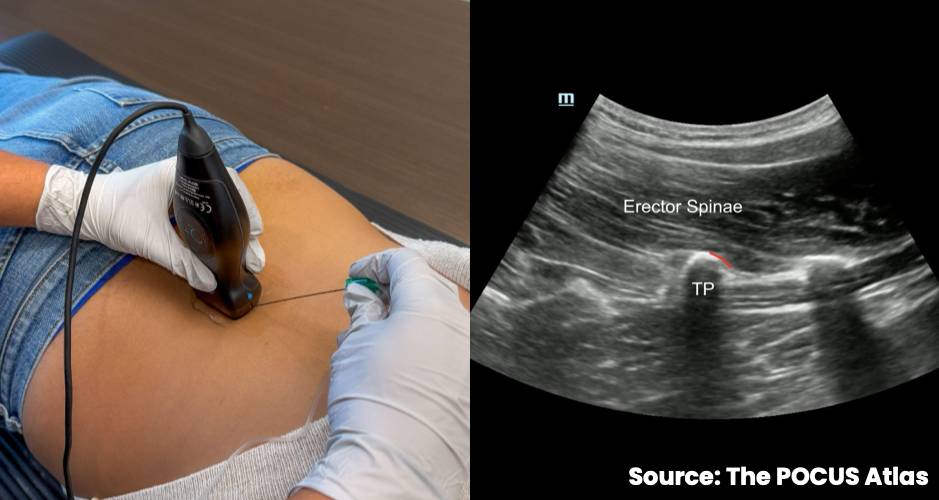
- Place the curvilinear transducer in a cranial-to-caudal parasagittal orientation over the lumbar spine
Ultrasound
Landmarks
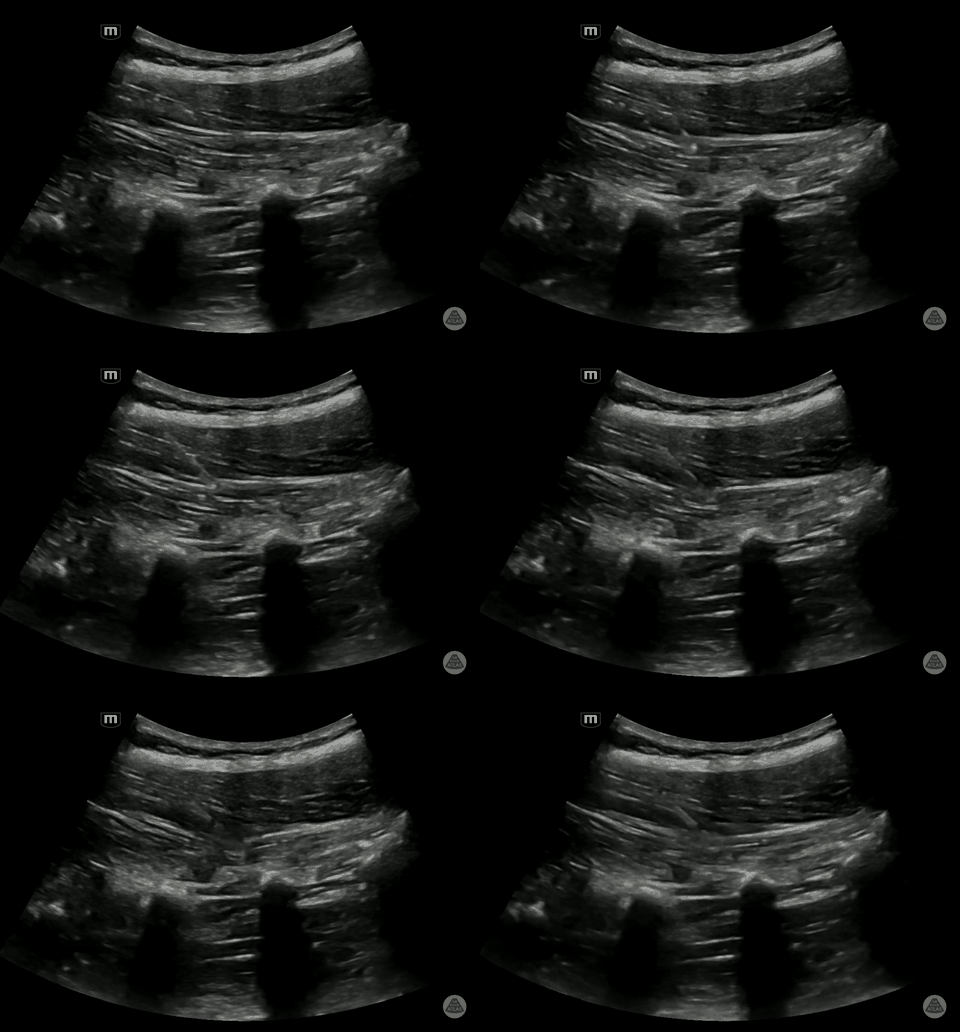
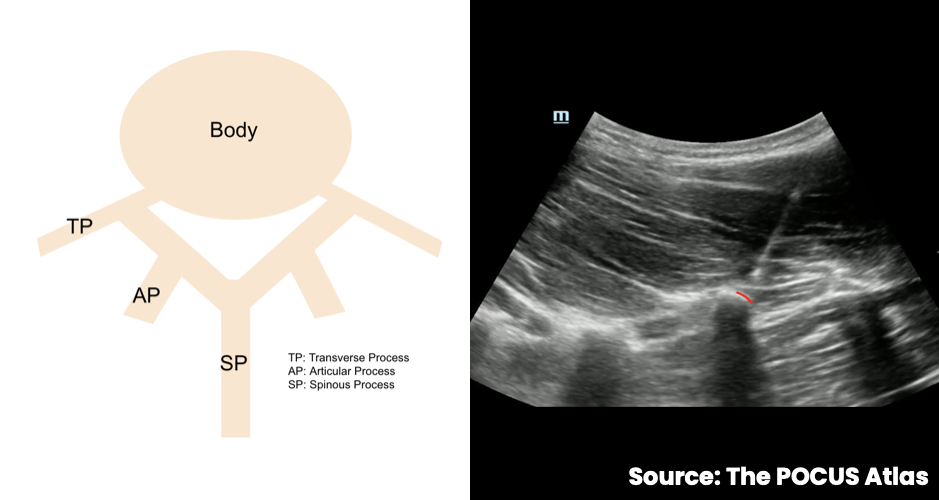
- Begin medially over the superficial spinous process.
- Move the transducer laterally across the articular process until the last and deepest bony structure is identified. This is the transverse process.
- Distinguish the target from the articular process, which is often larger and more superficial than the transverse process.
- Identify the erector spinae muscle overlying the corner of the transverse process.
Technique
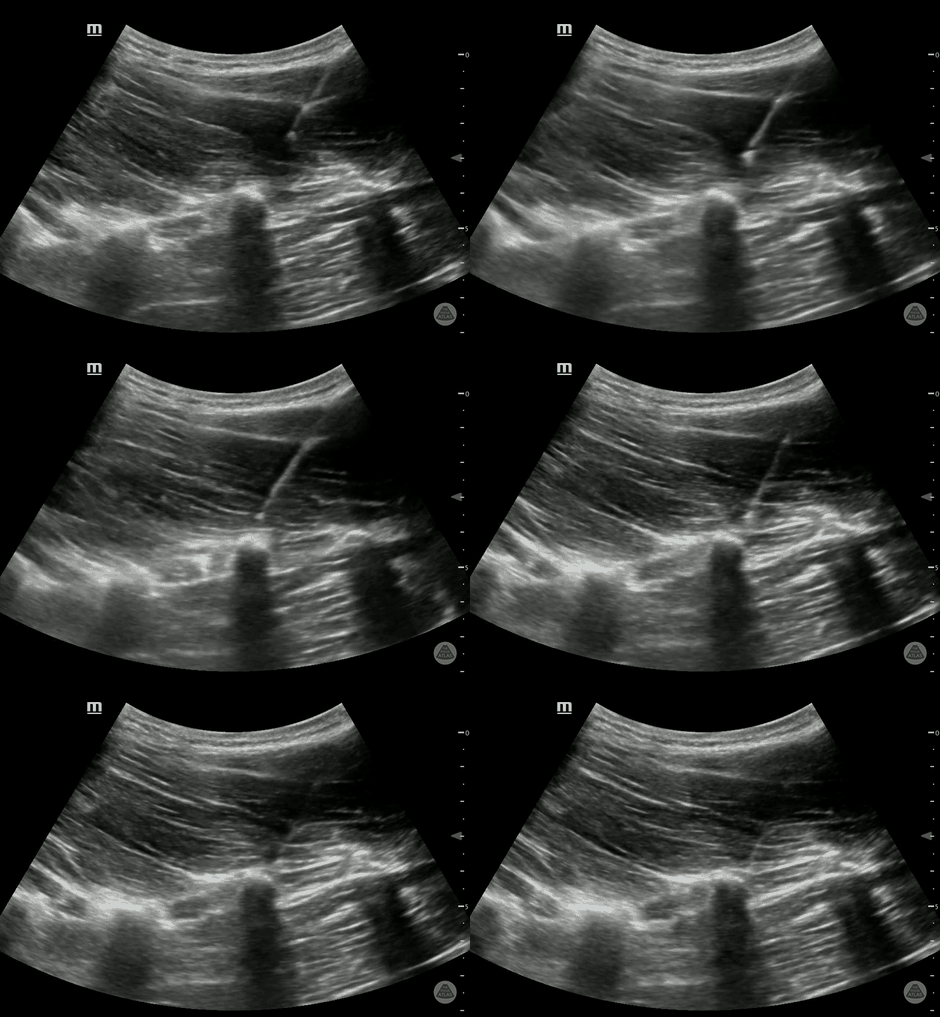
- Advance the needle in-plane at a steep angle toward the corner of the transverse process.
- Contact the periosteal target at the transverse-process corner.
- Inject incrementally and visualize separation of the erector spinae fascial plane from the transverse process.
Examples